Meer over de Wolfpack-broers

De verbazingwekkende documentaire 'The Wolfpack' roept veel vragen op bij menig kijker. In de volgende interviews en artikelen bieden experts, journalisten en de broers extra informatie.
Hoe heeft regisseur Moselle zo dichtbij kunnen komen bij een groep jongens die zo geïsoleerd is als de Angulo-broers? En wat voor effect heeft de afgesloten jeugd op deze mannen gehad? In de volgende artikelen leer je meer over de Angulo-telgen.
Experts over een geïsoleerde jeugd
De eerste link verwijst naar een verdiepend interview van People. Hierin wordt besproken hoe de broers in korte tijd gewend zijn geraakt aan het leven buiten de muren van hun huis in New York en hoe ze omgaan met de gedragsnormen die in de stad én de datingwereld gelden.
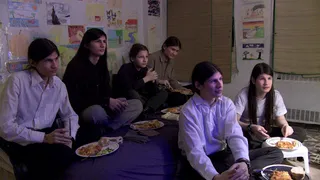
People.com: The Wolfpack's 7 Children Locked in Their N.Y.C. Apartment: How Could This Happen?
The documentary The Wolfpack goes inside the lives of six brothers – Bhagavan, Govinda, Narayana, Mukunda, Krisna (now Glenn) and Jagadesh (now Eddie) – who allegedly grew up locked in a New York City apartment, rarely visiting the outside world.
Interview met de broers en Moselle + foto's
Eenmaal vrij, blikken de broeders in dit interview van The Telegraph terug op hun afgesloten leven. Ze bespreken hoe ze hun kleine leven draaglijk maakten en hoe fantasie hen hielp om het leven leuk te houden. De tekst wordt begeleid door sprekende foto’s van de jongens in hun eigenzinnige outfits.
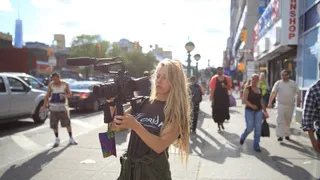
The Telegraph: ''The Wolfpack: 'In our heads, we could go wherever we wanted'''
Forbidden from leaving their New York apartment, the Angulo brothers learnt about life only from movies. The Wolfpack explores what happened to them when they broke free
De scheidslijn tussen documentaire en realiteit
De derde link naar Salon.com gaat dieper in op twijfels die dikwijls opkomen bij de kijker van The Wolfpack. The Wolfpack is typisch het soort film waarvan je je na het kijken afvraagt in hoeverre het verhaal waargebeurd is. In dit artikel beschrijft Lauren Wissot waar deze twijfel bij de kijker vandaan komt.
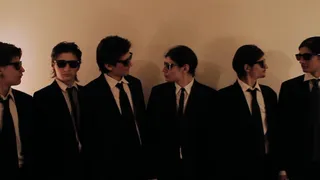
Salon.com: ''“The Wolfpack” hype: When the line between documentary and “reality” blurs, we see the story we want to see''
Winner of the Grand Jury Prize for U.S. Documentary at this year’s Sundance Film Festival, Crystal Moselle’s debut feature “The Wolfpack” is “the incredible true story of six teenage brothers raised in isolation in New York, with movies as their only outlet to the world,” according to the press notes that could also serve as a reality TV pitch. The film focuses on the Angulo brothers — eldest Bhagavan, the twins Govinda and Narayana, Mukunda (called the “alpha” of the pack), and younger siblings Krsna and Jagadisa (who now go by Glenn and Eddie, respectively, according to this interview they gave to Vogue) — whom Moselle first encountered not far from their Lower East Side apartment as they raced past her, catching the fashion filmmaker’s eye with their long hair and striking looks. She chased them down, struck up a conversation, mentioned she was a filmmaker, and voilà! — a friendship was born.
Interview in Grist door Suzanne Jacobs
Narayana Angulo heeft tegenwoordig de vrijheid heeft om zijn liefde voor het milieu om te zetten in activisme. Hij is sinds drie jaar actief voor de New York Public Interest Research Group, waar hij zich onder andere inzette tegen de winning van schaliegas. In dit laatste interview waarnaar we linken, bespreekt Narayana waar zijn interesse in het milieu vandaan komt.
Grist: ''One of the brothers in the hit documentary “The Wolfpack” gives a damn about the environment''
Narayana Angulo spent practically his entire childhood locked in a cramped public housing apartment on the Lower East Side of Manhattan. He and his six siblings grew up under the strict rule of a controlling father, Oscar, who let them go outside maybe a few times a year, although never during the winter, and one year, not at all. The family lived on welfare and whatever small income the kids’ mother, Susanne, earned for homeschooling the whole brood.